
Pleated and Cellular Blinds Made to Measure in Cornwall and Devon
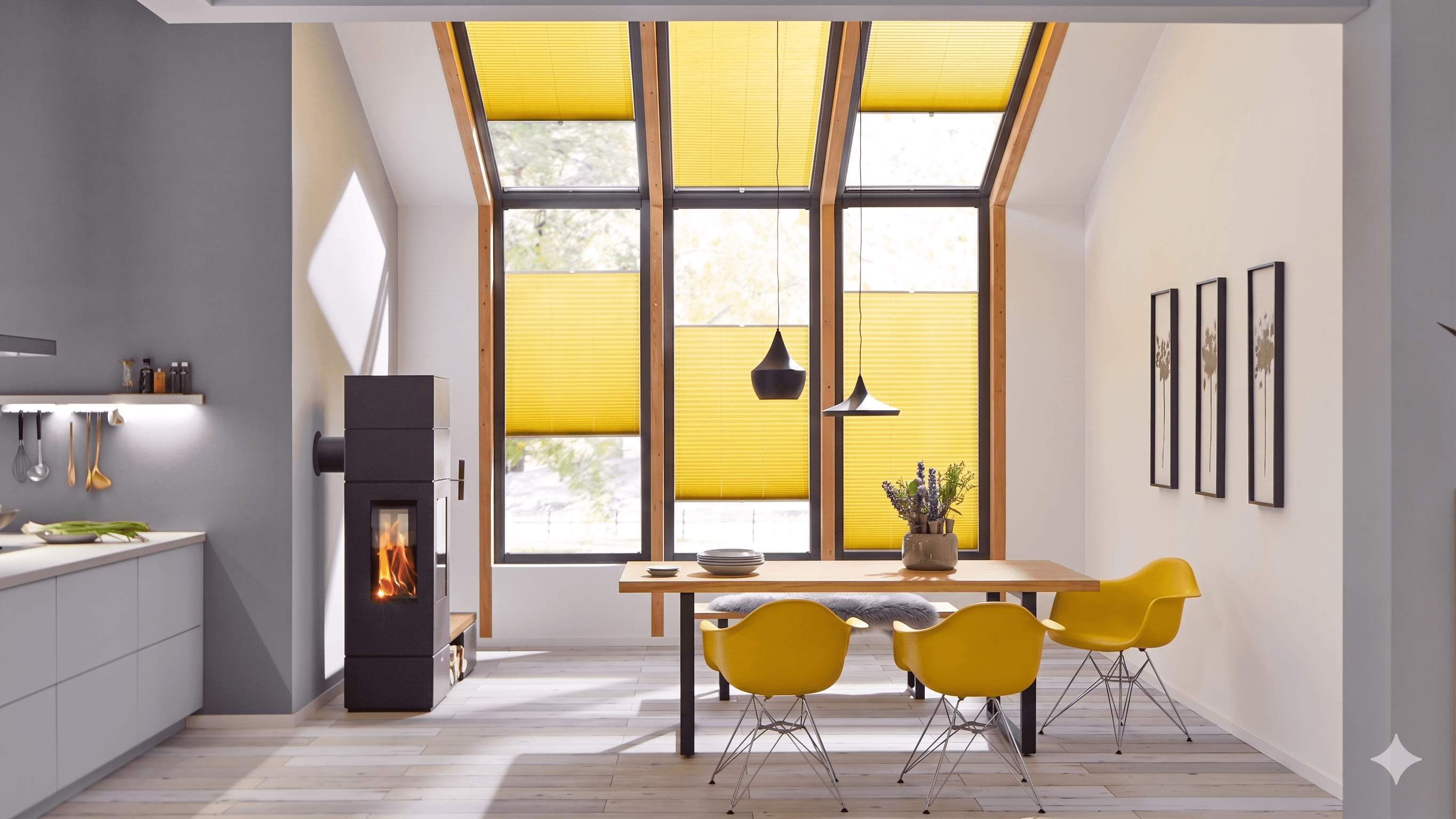
Aquarius Range
Exquisite pleated blinds in a vast array of high-definition textures and colors.
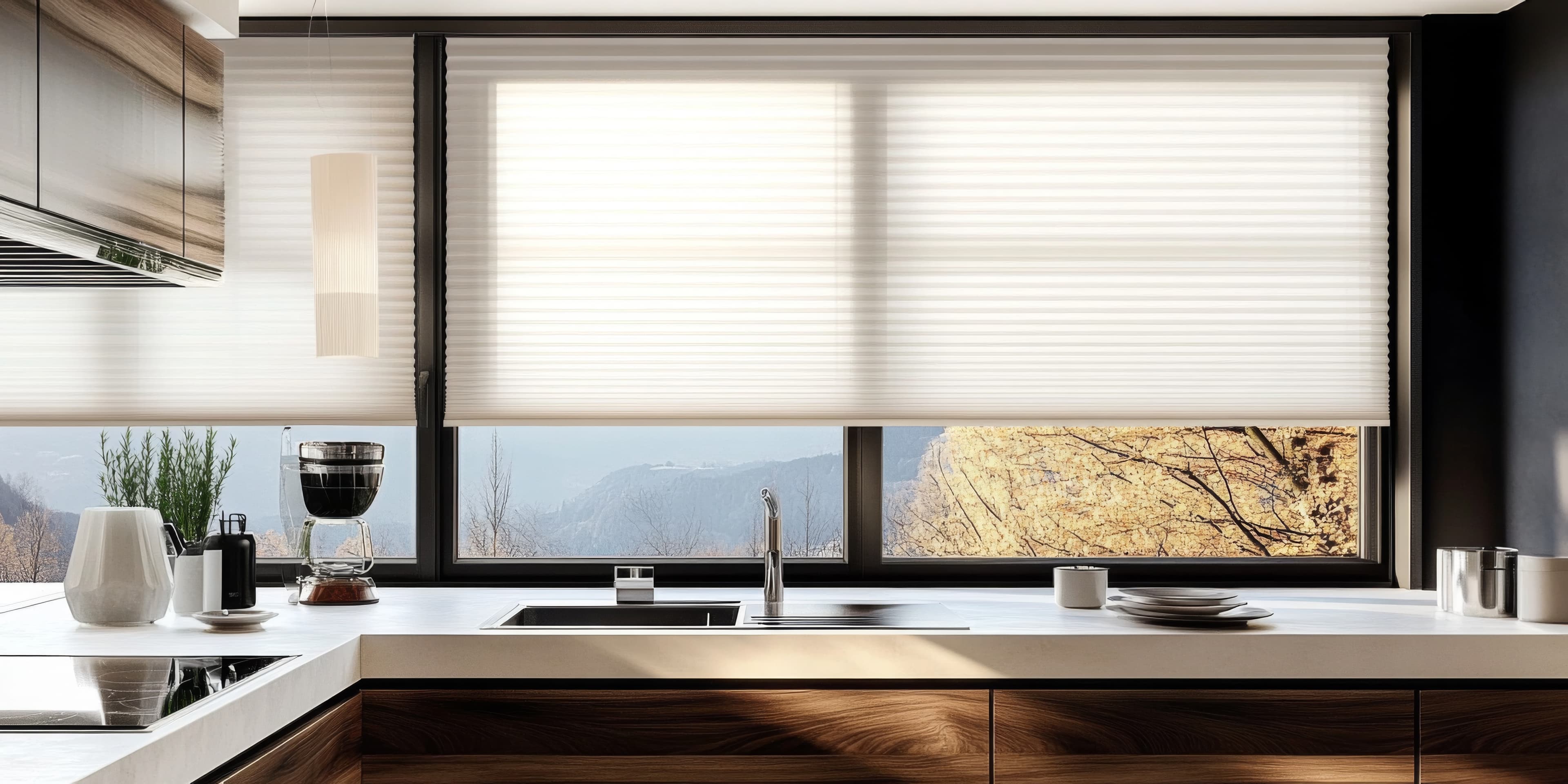
Louvolite Range
Premium cellular and pleated blinds featuring integrated window environments.
choosing a pleated blind
A pleated blind is a sheet of fabric folded into a tight concertina that stacks into a very slim bundle when raised. A cellular or honeycomb blind is its close cousin, two pleated layers joined to form air pockets. Both are light and neat, and both can be made to fit shapes other blinds can't, which is why they're the usual answer for conservatories, roof windows, bi-folds and awkward glazing.
Pleated or cellular
A single-layer pleated blind is the lighter and more affordable of the two. It filters daylight nicely and suits living rooms and studies where you want softened light and privacy. The lift cords run through small holes punched in each pleat, and those holes show when you look closely.
A cellular blind, which the Aquarius Range calls Hive, has two layers bonded into a row of hexagonal cells. The cells trap air between the glass and the room, which Louvolite describes as a thermal barrier, so the room holds its warmth on a winter evening and stays cooler when the sun is on the glass. The cords run hidden inside the cells, and the Hive fabrics also come in blackout versions for bedrooms.
Conservatories, roof glass and awkward shapes
Pleated and cellular fabric can run between rails held under light tension, so the blind stays put on sloping roof glass, in a skylight or across a triangular gable instead of sagging. The same system fits shaped and angled frames that a roller or Venetian simply can't. In a conservatory facing south over the sea, a cellular fabric on the roof panels takes the edge off glare and heat far better than a thin pleat. The fabric is lighter than a roller cloth, though, and is best dusted or gently vacuumed rather than scrubbed.
The two ranges we offer
Our Aquarius Range covers both single pleated fabrics and the Hive cellular collection, including the finer Micro cells, in whites, naturals, greys and stronger colours. The Louvolite Range brings their Astral, Celeste and Festival fabrics. Celeste, for example, is a 100% polyester fabric in ten colours from white to Tuscan red. Both ranges work in the no-drill Intu and Perfect Fit systems shown on our Perfect Fit page, so the same fabric can go on uPVC windows without screwing into the frame.
common questions
Are pleated blinds good for conservatories?
They are one of the best options, because they can be made to fit roof panels, side windows and odd shapes, and held in tension so they don't sag on sloping glass. For a conservatory that overheats in summer or chills in winter, choose a cellular fabric over a single pleat for its insulating air pockets.
What is the difference between pleated and honeycomb blinds?
A pleated blind is one folded layer, with the lift cords passing through visible holes. A honeycomb, or cellular, blind is two layers joined into cells that trap air and hide the cords. Honeycomb insulates better and comes in blackout. Plain pleated lets more light through and costs less.
Can pleated blinds be blackout?
Blackout is really a job for the cellular fabrics. We offer Hive in blackout fabrics as well as light-filtering ones, and we bring the colours to the survey. Even then some light will show at the edges of a recess-fitted blind, which is why a Perfect Fit frame, which reduces the side gaps, is worth considering for a bedroom.
Are pleated blinds child safe?
Tensioned pleated blinds have no loose cords at all, so they are safe by design. Free-hanging corded versions are fitted with the safety devices required under EN 13120 and the BBSA Make It Safe guidance, and the cord should always be kept secured and away from cots and beds.