
Walk into any high street blind retailer and you'll be faced with hundreds of options — roller blinds, Roman blinds, Venetian blinds, plantation shutters, vision blinds, cellular blinds, and more. The choice is genuinely overwhelming, and the consequences of getting it wrong are real: a bedroom blind that doesn't block enough light, a kitchen blind that's impossible to keep clean, or a living room blind that looks cheap against an otherwise carefully designed interior.
At Rogers Blinds, we survey thousands of homes across Cornwall and Devon each year. Over more than a century, we've developed a clear understanding of which blinds work in which rooms — and why. This guide gives you the benefit of that expertise, free of charge.
Bedroom Blinds — Darkness and Calm Are the Priority
Sleep quality is the primary concern in a bedroom, and that means one thing above all else: blackout performance. In Cornwall and Devon, where summer mornings arrive early and neighbours can be close, a blind that merely dims the light is rarely sufficient.
Our recommendation for most bedrooms is a blackout roller blind — either fitted inside the recess for a clean, minimal look, or with a cassette housing outside the recess to eliminate the light gaps that even well-fitted recessed blinds can allow. For a softer, more traditional aesthetic, a blackout Roman blind in a lined fabric is a beautiful alternative.
In children's bedrooms, we always recommend cordless or motorised operation. Exposed cords and chains are a serious safety hazard, and the UK has strict regulations governing their use in homes with children under sixteen.
- Best blind type: Blackout roller blind or blackout Roman blind
- Key consideration: Light gaps around the recess edge — use a cassette blind to minimise these
- Safety priority: Cordless or motorised for children's rooms
- Popular fabric: Dimout or blackout, in a neutral colour that doesn't date
Living Room Blinds — Light Control Without Sacrificing the View
The living room is where blind choice gets most interesting — and most personal. Unlike a bedroom, where darkness is the objective, in a living room you're balancing privacy, light control, aesthetic, and in many Cornwall and Devon homes, a view worth protecting.
For south or west-facing living rooms, solar roller blinds are one of the most effective solutions. Solar fabrics filter UV and reduce glare without blocking the view or making the room feel dark — you can sit comfortably without squinting at the television, without drawing the blind entirely and cutting off your garden or sea view.
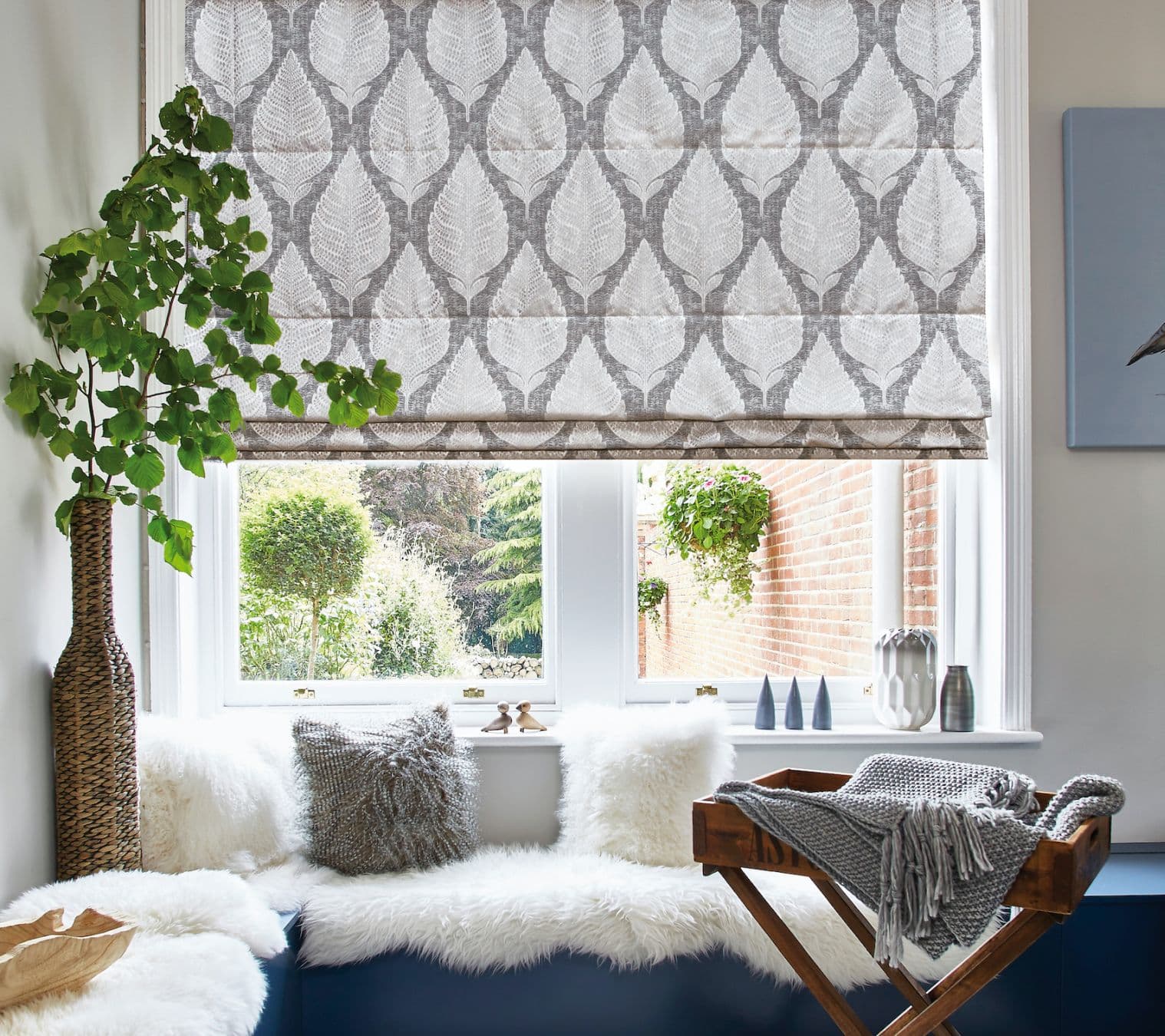
For a more traditional or layered look, Roman blinds in a textured linen or patterned fabric add warmth and interest. They work beautifully in the living rooms of period properties — Victorian terraces, granite cottages, and the older Devon farmhouses common across our service area.
Day/night (or vision) blinds, with their alternating sheer and opaque fabric bands, are increasingly popular in living rooms where you want maximum flexibility — fully filtering during the day, providing complete privacy at night, with everything in between at the turn of a cord or the press of a button on a motorised version.
Kitchen Blinds — Practical First, Beautiful Second
Kitchens are demanding environments for blinds. Steam, cooking splatter, condensation, and constant handling mean that whatever you choose must be easy to clean, moisture-resistant, and robust enough for daily use.
Roller blinds in a wipe-clean PVC or treated fabric are the most practical choice for most kitchens. They're quick to raise and lower, easy to wipe down, and available in hundreds of patterns and colours — including the wood-effect and botanical designs that have become very popular in contemporary kitchens.
Venetian blinds — particularly aluminium Venetians — are excellent in kitchens. The slats are easy to wipe clean, moisture has no effect on aluminium, and the precise light control is useful above a sink or worktop.
Avoid Roman blinds and fabric-rich options in kitchens unless you're prepared to clean them regularly. Fabric absorbs cooking odours and steam over time, and dry cleaning bills quickly make the initial savings on a cheaper fabric look less appealing.
Bathroom Blinds — Moisture Resistance Is Non-Negotiable
Bathrooms are the most moisture-intense room in any home, and a blind that isn't specified for this environment will deteriorate rapidly. Mould, warping, and fabric degradation are all common consequences of fitting the wrong product.
Our recommendation for bathrooms is a moisture-resistant roller blind in a PVC or moisture-rated fabric, or a faux wood Venetian blind. Unlike real wood, faux wood is completely impervious to humidity — it won't warp, swell, or split, even in a poorly ventilated bathroom.
For more design-led bathrooms, our waterproof roller blind range includes some genuinely beautiful printed fabrics — geometric patterns, botanicals, and neutral linen-effect designs that look far more considered than a plastic-effect blind.
Conservatory and Skylight Blinds — Specialist Solutions for Non-Standard Windows
Conservatories, skylights, apex windows, and roof glazing require specialist blinds that can't be purchased off-the-shelf. Pleated and cellular blinds are the solution most commonly specified for these applications — they're available in systems that track along the glazing bar and can be fitted to sloped surfaces, vertical windows, and even triangular or trapezoidal panes.
Cellular (honeycomb) blinds add an additional benefit in conservatories: significant thermal insulation. The honeycomb structure traps air within each cell, reducing heat loss in winter and blocking solar gain in summer — making a conservatory genuinely more usable throughout the year.
Not sure which blind is right for your room? Book a free home survey and our specialist will visit, measure, and advise — with no obligation to buy.
Book Free SurveyThe One Rule That Applies to Every Room
Whatever room you're furnishing, the single most important decision is made to measure versus ready-made. Off-the-shelf blinds are available in a limited range of standard sizes that will never perfectly fit your window — they leave light gaps at the sides, the mechanism sits awkwardly, and the overall effect is always slightly apologetic.
Made to measure blinds from Rogers are cut to the millimetre — inside your window recess or outside it, depending on your preference and the type of blind. The difference in the finished result is significant, and the difference in price is smaller than most people expect.
Add as a preferred source on Google